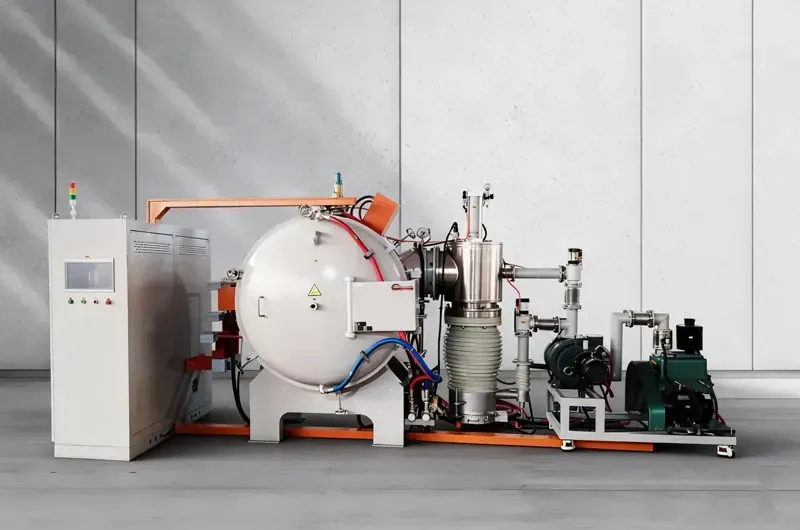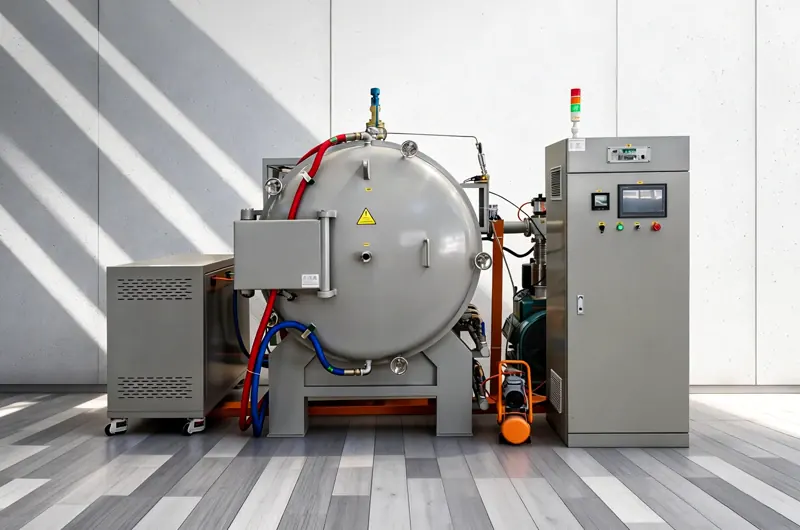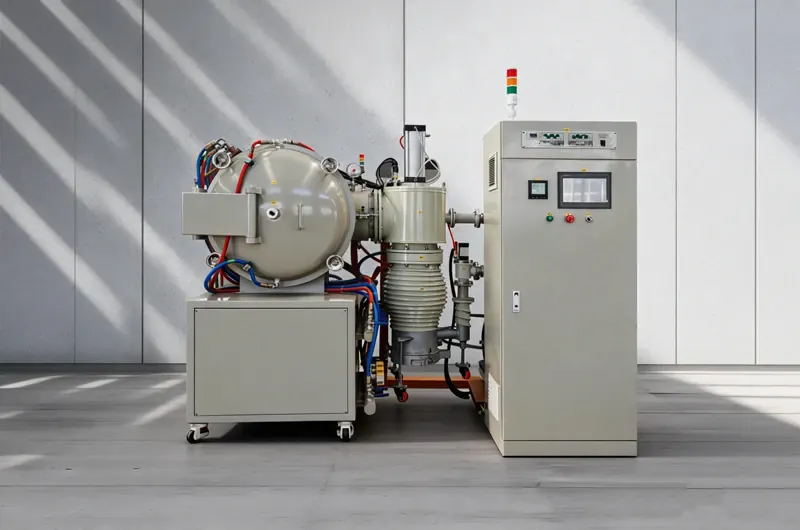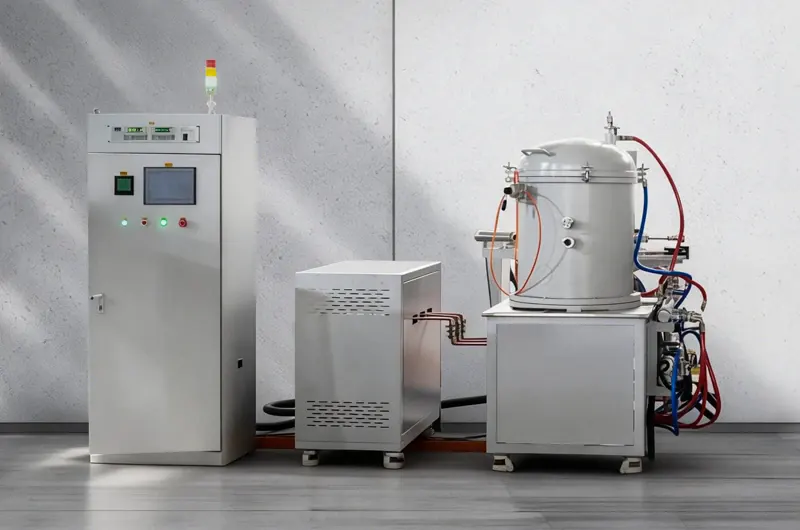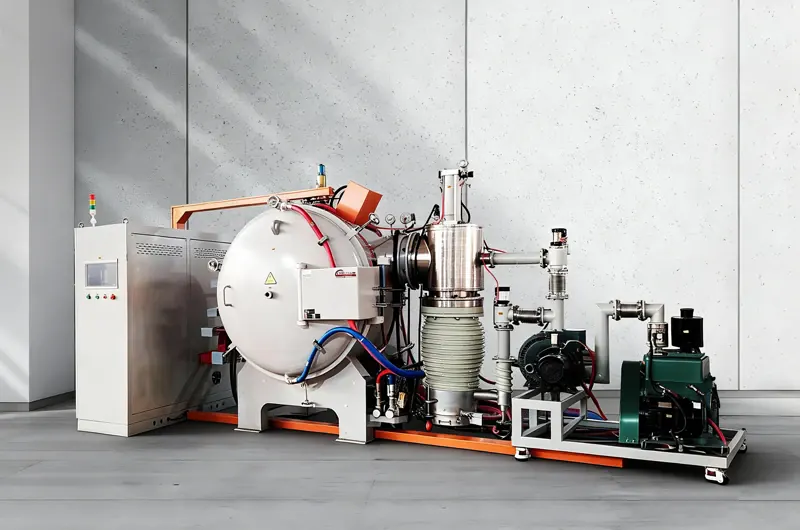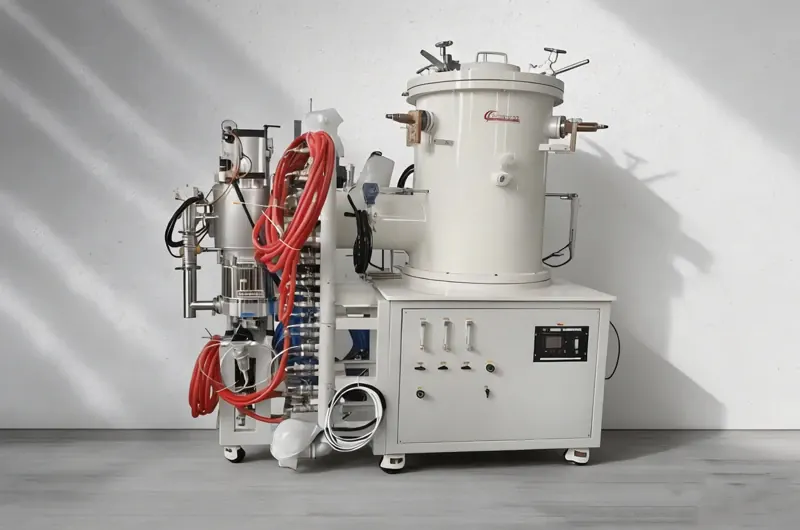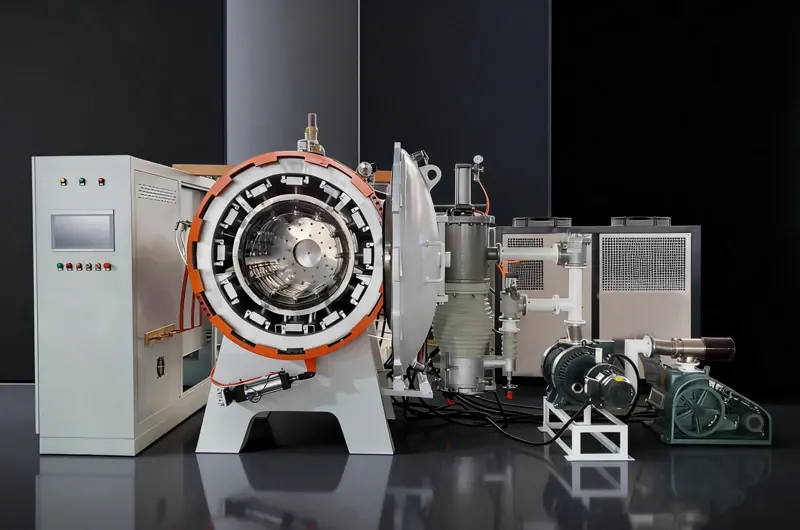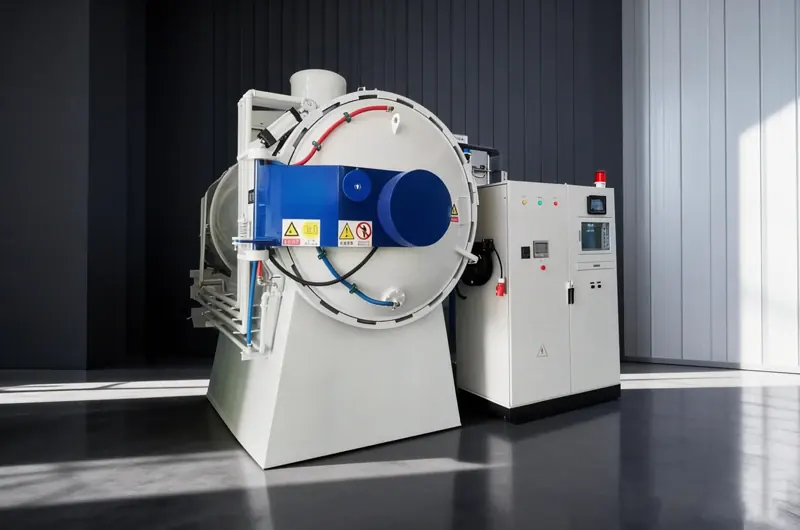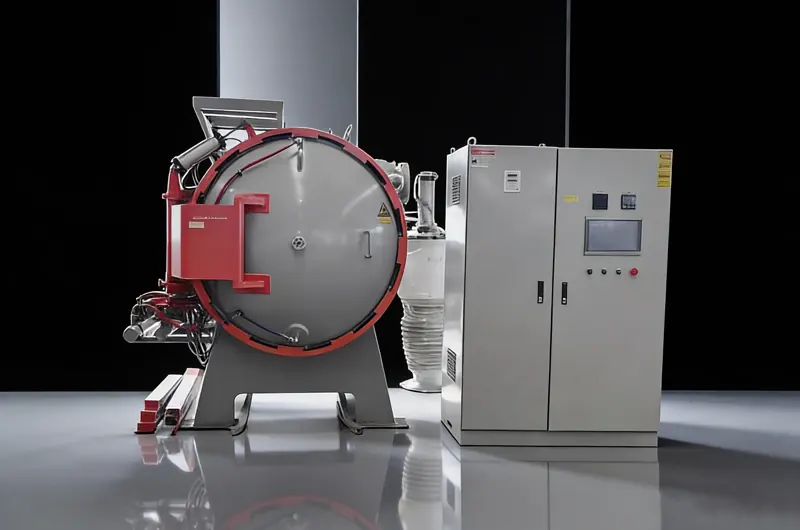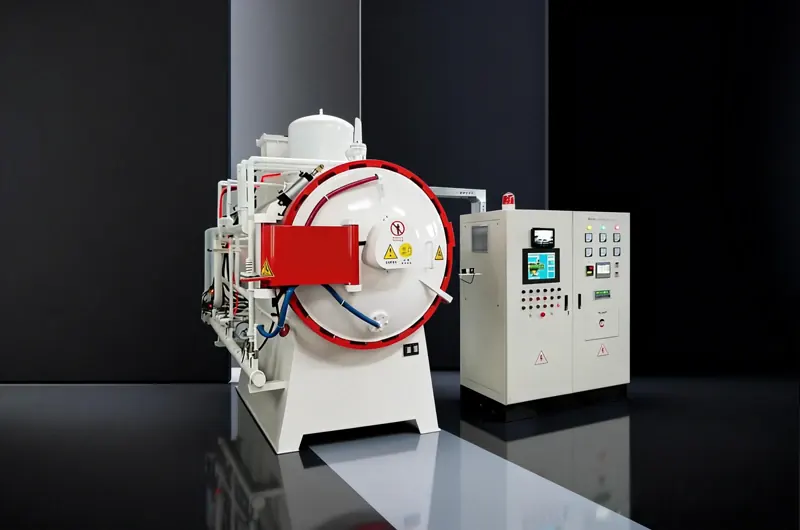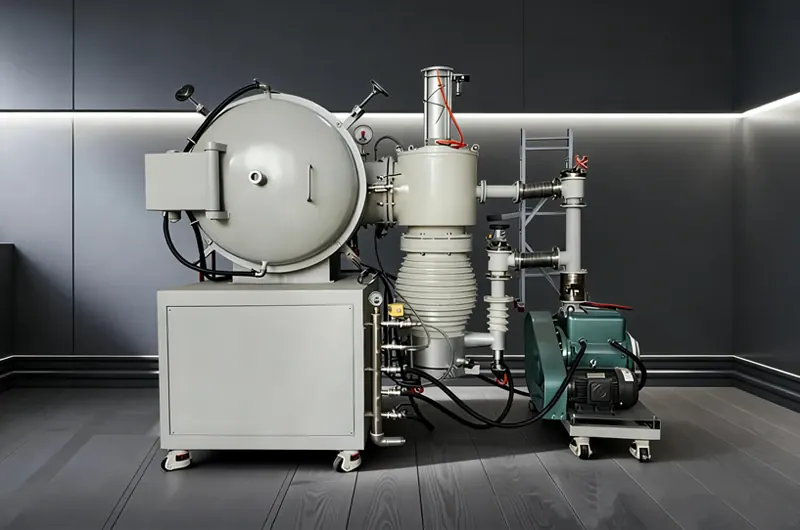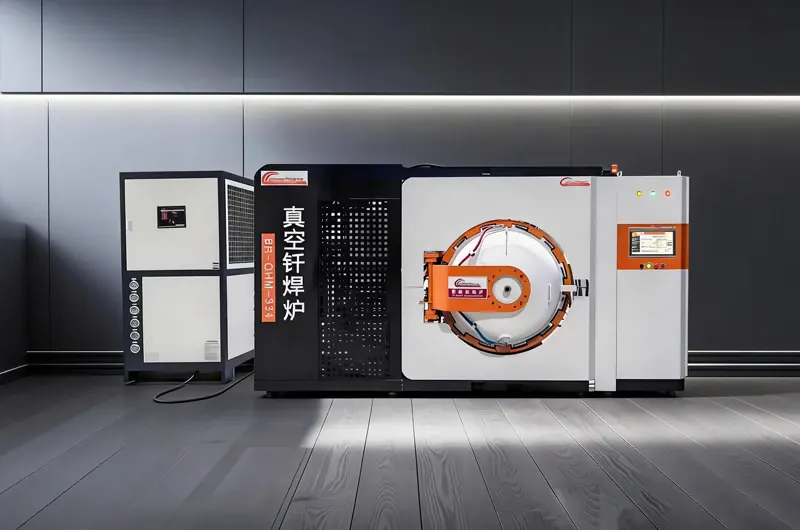
Vacuum Chamber
Sealed vessel — stainless steel or carbon steel
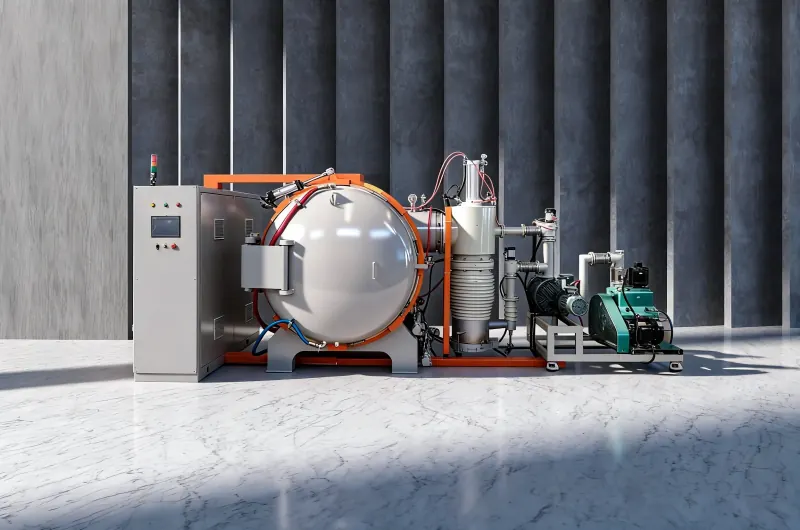
A vacuum furnace is a high-temperature industrial furnace in which the heating process takes place inside a sealed chamber evacuated to a specified vacuum level — typically ranging from low vacuum (10⁻¹ Pa) to ultra-high vacuum (10⁻⁵ Pa). By eliminating oxygen, nitrogen, and other atmospheric gases, vacuum furnaces prevent oxidation, decarburization, and surface contamination of the workpiece.
The choice of heating elements — graphite, molybdenum strip, tungsten wire, or stainless steel — directly determines the furnace's maximum operating temperature, achievable vacuum degree, heating uniformity, and overall process capability. Vacuum furnaces are indispensable wherever surface integrity, dimensional precision, and material purity are critical requirements.
Sealed vessel — stainless steel or carbon steel
Graphite / Molybdenum strip / Tungsten wire / SS
Graphite felt / Mo sheet / Ceramic fiber board
Rotary vane + Roots pump + Diffusion pump
PLC / PID controller — ±1°C precision
Gas quench / Oil quench / Water-cooled shell
Vacuum sintering furnaces consolidate powdered metals, ceramics, and composites into dense, high-performance components through precisely controlled heat in an oxygen-free vacuum environment.
Brother Furnace offers six configurations differentiated by heating element type and hot zone construction — from stainless steel chamber designs for MIM sintering, to extreme-temperature tungsten wire furnaces for refractory metal and aerospace R&D reaching 2,800°C.
Vacuum heat treatment produces bright, oxide-free surfaces, minimizes distortion, eliminates post-treatment cleaning, and significantly improves the fatigue life and mechanical performance of treated components.
Brother Furnace offers a complete line covering vacuum quenching (gas & oil), vacuum annealing, vacuum tempering, and vacuum normalizing.
Heats steel or alloy components to the austenitizing temperature in vacuum, then rapidly cools them to achieve a hardened martensitic microstructure.
Essential for producing high-hardness, wear-resistant tool steels, die steels, and high-speed steels (HSS) with minimal surface oxidation and distortion. Available in two configurations:
Vacuum brazing joins materials using a filler metal (brazing alloy) that melts and flows into the joint gap by capillary action — in a high-vacuum environment without flux.
The result is extremely clean, flux-free brazed joints with excellent mechanical strength and outstanding surface quality.
The preferred joining method for precision assemblies in aerospace, automotive, electronics, and cutting tool manufacturing.
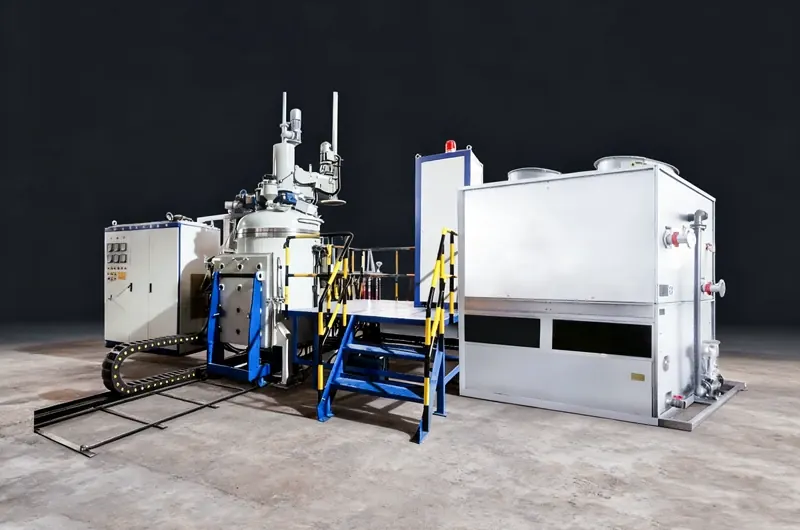
The Vacuum Medium Frequency Induction Melting Furnace (VIM Furnace) uses electromagnetic induction heating to melt metallic charges in a sealed vacuum chamber — enabling precise melting of reactive, high-purity, and high-performance alloys that cannot be processed in conventional atmosphere furnaces.
As a dedicated vacuum furnace factory, we bring together engineering expertise, manufacturing precision, and deep application knowledge to deliver furnaces that perform reliably in the most demanding environments.
We design, fabricate, assemble, and test every furnace in-house — from the vacuum chamber and hot zone to the control system and pumping unit. Full vertical integration ensures consistent quality and faster lead times.
Our engineering team specifies the right configuration — chamber size, maximum temperature, vacuum level, heating element type, hot zone design, and cooling method — perfectly matched to your process requirements.
From stainless steel chamber furnaces (~1,200°C) to extreme-temperature tungsten wire furnaces (2,800°C), we cover the complete spectrum of vacuum thermal processing temperatures.
Each furnace undergoes comprehensive factory acceptance testing (FAT) — including vacuum leak testing, temperature uniformity survey (TUS), and full system functional testing before shipment.
Brother Furnace supplies vacuum furnaces to customers across North America, Europe, Southeast Asia, and the Middle East — with full installation guidance, operator training, and ongoing technical support.
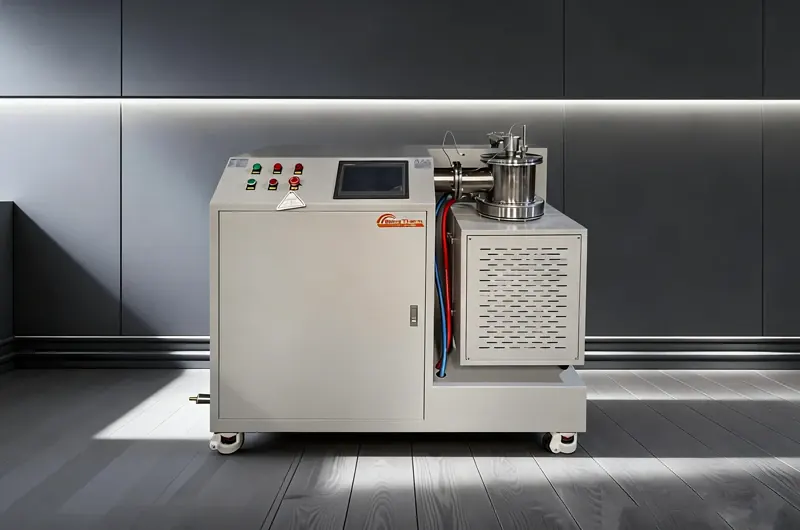
Whether you need a compact laboratory vacuum furnace for R&D, or a high-throughput industrial vacuum sintering furnace for production, Brother Furnace delivers at every scale.
Selecting the right vacuum furnace requires careful evaluation of several key technical and operational parameters. Use this guide to identify the most suitable furnace type for your application.
Define the peak temperature required — this determines whether a stainless steel, ceramic fiber, molybdenum strip, graphite, or tungsten wire hot zone is appropriate. Ranges from 1,200°C (SS chamber) to 2,800°C (W wire furnace).
Brazing and annealing of stainless steel may only require 10⁻² Pa, while sintering of reactive metals or melting of superalloys demands 10⁻⁴ Pa or better. Tungsten sintering may require 10⁻⁵ Pa.
Carbon-sensitive materials such as titanium require molybdenum or all-metal hot zones rather than graphite. Reactive metals need high-purity vacuum. Cemented carbide sintering requires high-temperature graphite or Mo hot zones.
Determine whether high-pressure gas quenching (2–20 bar), oil quenching, or slow furnace cooling is required. This directly determines whether a vacuum gas quenching furnace, vacuum oil quenching furnace, or standard annealing furnace is needed.
Determine required chamber volume and loading configuration. Brother Furnace offers solutions from compact lab-scale vacuum furnaces to large-volume industrial production furnaces with front, top, or bottom loading.
Many processes benefit from inert gas backfill (nitrogen or argon) at specific stages. Ensure the selected furnace supports partial pressure control for sensitive materials such as titanium alloys and rare earth magnets.
Quick-reference comparison of all Brother Furnace vacuum furnace models — covering maximum temperature, vacuum level, heating element type, and primary applications.
| Furnace Type | Max Temp | Vacuum Level | Heating Element | Typical Applications |
|---|---|---|---|---|
| SS Chamber Sintering Furnace | 1,200°C | 10⁻³ Pa | Resistance wire | MIM, PM stainless steel |
| Ceramic Fiber Sintering Furnace | 1,400°C | 10⁻³ Pa | Resistance element | Technical ceramics, cermets |
| Molybdenum Strip Sintering Furnace | 1,600°C | 10⁻⁴ Pa | Mo strip | Cemented carbide, refractory metals |
| Graphite Carbon Tube Furnace | 2,200°C | 10⁻³ Pa | Graphite tube | SiC, B₄C, UHTC |
| Vacuum Graphite Furnace | 2,400°C | 10⁻³ Pa | Graphite element | Carbide, NdFeB magnets |
| Vacuum Tungsten Wire Furnace | 2,800°C | 10⁻⁵ Pa | W wire | W/Mo sintering, aerospace R&D |
| Vacuum Gas Quenching Furnace | 1,350°C | 10⁻³ Pa | Mo / Graphite | HSS tools, die steel, aerospace |
| Vacuum Oil Quenching Furnace | 1,300°C | 10⁻³ Pa | Mo / Graphite | Bearing steel, gear steel |
| Vacuum Annealing Furnace | 1,300°C | 10⁻⁴ Pa | Mo / Graphite | Ti alloys, stainless steel |
| Vacuum Tempering Furnace | 700°C | 10⁻² Pa | Resistance element | Post-quench tempering, HSS tools |
| Vacuum Normalizing Furnace | 1,100°C | 10⁻³ Pa | Mo / Graphite | Forgings, castings, weldments |
| Heat-Resistant Steel Brazing Furnace | 1,150°C | 10⁻³ Pa | Resistance element | Heat exchangers, medical devices |
| Mo Strip Chamber Brazing Furnace | 1,600°C | 10⁻⁴ Pa | Mo strip | Aerospace, superalloy brazing |
| Cutting Tool Brazing Furnace | 1,000°C | 10⁻³ Pa | Resistance element | Carbide tools, saw blades |
| Vacuum Induction Melting Furnace | 1,800°C+ | 10⁻³ Pa | Induction coil (MF) | Superalloys, Ti alloys, NdFeB |
Brother Furnace vacuum furnaces support critical thermal processing steps across a wide range of industries — from aerospace and cutting tools to medical devices and advanced materials research.
Vacuum heat treatment and brazing of turbine blades and structural components. VIM melting of nickel-based and titanium superalloys for aerospace precision casting.
Vacuum sintering of WC-Co hard metal inserts. Brazing of carbide cutting tools and saw blades. Heat treatment of HSS and PM tool steels.
Vacuum sintering of MIM parts and PM structural components across stainless steel, iron-based, and titanium material systems.
Vacuum annealing of electronic substrates. Vacuum brazing of electronic assemblies and precision heat sinks.
Vacuum annealing and brazing of surgical instruments and medical-grade titanium components where contamination-free surfaces are a regulatory requirement.
Vacuum heat treatment of turbine components. Vacuum brazing of heat exchangers and recuperators. Sintering of fuel cell components.
Vacuum heat treatment of gears, shafts, and bearing components. Vacuum brazing of automotive heat exchangers and EGR coolers.
Laboratory vacuum furnaces for universities and R&D centers exploring new materials, sintering processes, and novel alloy systems.
Common questions from engineers, procurement managers, and researchers evaluating Brother Furnace equipment for their thermal processing applications.
A vacuum furnace operates in an evacuated chamber, completely eliminating reactive gases like oxygen and nitrogen. An atmosphere furnace uses a controlled protective gas at or near atmospheric pressure. Vacuum furnaces provide superior surface quality, lower contamination risk, and are essential for reactive metals.
Annealing of stainless steel may only require 10⁻² Pa, while sintering of titanium or melting of superalloys typically demands 10⁻³ to 10⁻⁴ Pa. For the most reactive materials like tungsten or rhenium, 10⁻⁵ Pa or better may be required. Our engineers can help determine the right vacuum specification for your process.
Yes. Depending on the hot zone configuration and maximum temperature, vacuum furnaces can process tool steels, titanium alloys, nickel superalloys, refractory metals (W, Mo, Ta, Re), and technical ceramics (Al₂O₃, ZrO₂, SiC, B₄C). Our team will recommend the right configuration for your material system.
Brother Furnace achieves temperature uniformity of ±3°C to ±10°C within the working zone, depending on furnace size and configuration. For critical aerospace and tooling applications, we offer enhanced uniformity designs meeting AMS 2750 standards.
Absolutely. Custom chamber dimensions, non-standard temperature ranges, special hot zone materials, unique loading configurations, and automation integration are all available. Contact our engineering team with your process requirements for a tailored proposal.
We provide complete installation and commissioning support, operator training, spare parts supply, remote diagnostic assistance, and on-site service — ensuring your vacuum furnace operates at peak performance throughout its entire service life.