- 1200°C – 1800°C Range
- 5 Door Configurations
- Custom Chamber Sizes
- PID Temperature Control
- CE · ISO 9001 Certified
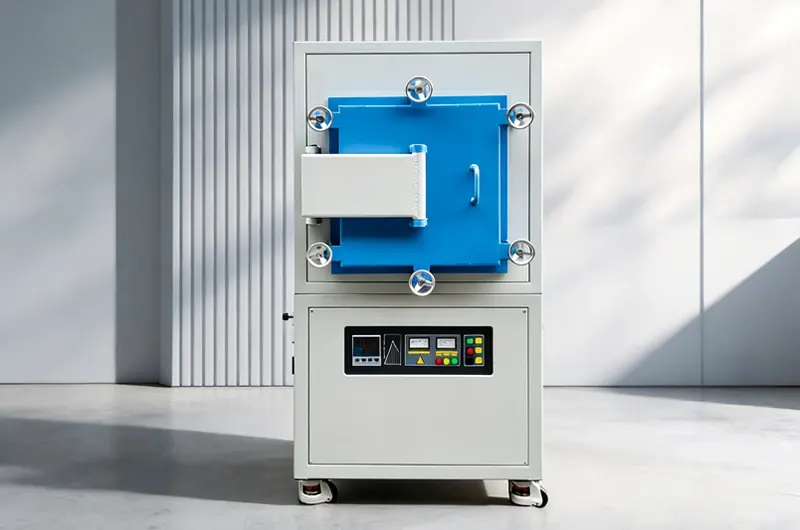
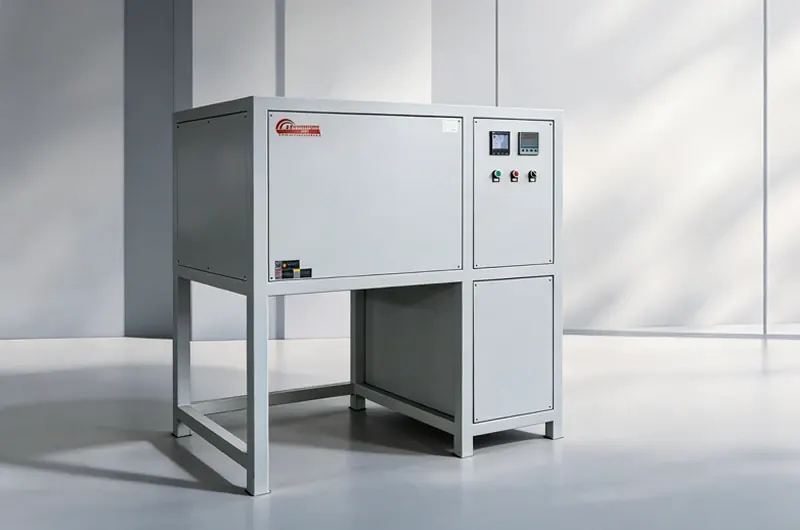
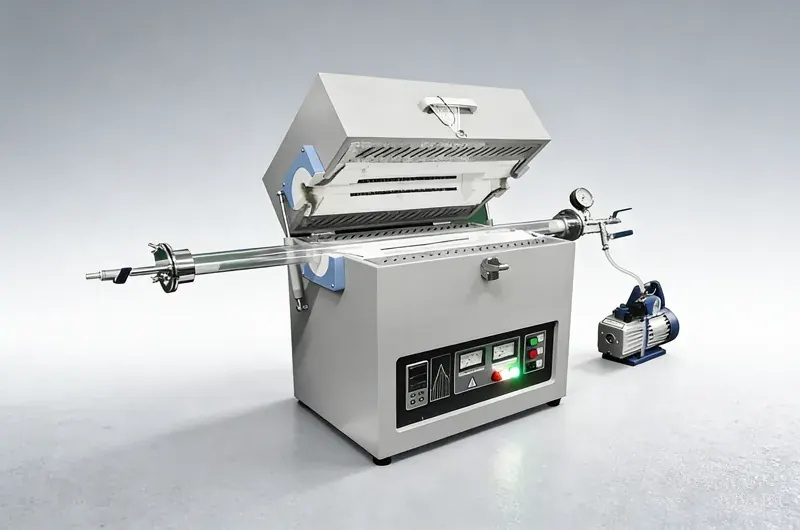
What Is a Box Furnace
The Universal Laboratory Heating Solution
A box furnace (also called a muffle furnace) is a front-loading or top-loading electric resistance furnace with a rectangular chamber design. The heating elements are completely separated from the working chamber by a refractory muffle or embedded in the chamber lining — this design ensures the sample is heated by radiation and convection without direct contact with the heating elements.
Box furnaces are the most versatile laboratory heating equipment, used for heat treatment, sintering, annealing, ashing, calcination, and general high-temperature processing. The rectangular chamber geometry accommodates samples of various shapes and sizes, from small crucibles to large ceramic plates.
Brother Furnace box furnaces are available in four temperature grades (1200°C, 1400°C, 1700°C, 1800°C) with five door configuration options and full customisation of chamber dimensions, atmosphere capability, and control systems.
1200–1800°C
Temperature Range
Four series covering all laboratory heating requirements from
general heat treatment to advanced ceramics sintering.
5 Styles
Door Configurations
Top-opening, bottom-opening (drop-bottom), left-opening,
right-opening, and sliding door options.
Custom
Chamber Sizes
Standard sizes from 1L to 500L. Custom dimensions available
to
fit your specific sample requirements.
PID
Temperature Control
30-segment programmable PID controllers with ±1°C accuracy.
Data
logging and remote monitoring options.
Temperature Series
Four Temperature Grades for Every Application
Select the temperature series that matches your maximum process requirement. Each series uses optimised heating elements and insulation for the target temperature range.
1200°C Series
1400°C Series
1700°C Series
1800°C Series
1200
Entry-Level Series
1200°C
Resistance Wire Box Furnace
FeCrAl Resistance Wire
The 1200°C series is Brother Furnace's entry-level box furnace platform, using iron-chromium-aluminium (FeCrAl) resistance wire heating elements. This series offers excellent value for general laboratory applications where temperatures above 1200°C are not required. The resistance wire elements are embedded in high-purity alumina fibre insulation, providing fast heat-up rates and good temperature uniformity.
Maximum operating
temperature: 1200°C (continuous), 1250°C (short-term)
FeCrAl resistance
wire
heating elements — cost-effective and reliable
High-purity alumina
fibre
insulation for low heat loss and fast heat-up
Temperature
uniformity:
±3°C
to ±5°C depending on chamber size
Ideal for drying,
ashing,
annealing, and general heat treatment
Typical Applications
1400
Mid-Range Series
1400°C
Silicon Carbide (SiC) Box Furnace
Silicon Carbide Rods
The 1400°C series uses silicon carbide (SiC) heating rods, enabling higher operating temperatures and longer element life compared to resistance wire. SiC rods are mounted vertically or horizontally in the chamber walls and radiate heat directly into the working zone. This series is the standard choice for ceramic pre-sintering, glass melting, and medium-temperature materials research.
Maximum operating
temperature: 1400°C (continuous), 1450°C (short-term)
Silicon carbide
(SiC)
heating rods — higher temperature capability and durability
Alumina
polycrystalline
fibre insulation for reduced heat loss
Temperature
uniformity:
±3°C
to ±5°C depending on chamber size
Ideal for ceramic
pre-sintering, glass work, and materials research
Typical Applications
1700
High-Temperature Series
1700°C
Molybdenum Disilicide (MoSi₂) Box Furnace
MoSi₂ Heating Elements
The 1700°C series uses molybdenum disilicide (MoSi₂) heating elements — a refractory metal silicide capable of continuous operation at temperatures up to 1700°C. MoSi₂ elements form a protective silica layer at high temperature, providing excellent oxidation resistance and long service life. This series is the standard for advanced ceramics sintering, refractory materials testing, and high-temperature research.
Maximum operating
temperature: 1700°C (continuous), 1750°C (short-term)
MoSi₂ heating
elements —
excellent high-temperature stability and oxidation resistance
High-purity alumina
polycrystalline fibre insulation for minimal heat loss
Temperature
uniformity:
±2°C
to ±4°C depending on chamber size
Ideal for advanced
ceramics,
refractory testing, and high-temp research
Typical Applications
1800
Ultra-High Temperature Series
1800°C
Ultra-High Temperature MoSi₂ Box Furnace
MoSi₂ Ultra-High Grade
The 1800°C series represents the highest temperature capability in the Brother Furnace box furnace range. Using premium-grade MoSi₂ heating elements and specialised ultra-high-purity alumina insulation, this series enables continuous operation at 1800°C for the most demanding applications including special ceramics sintering, refractory materials testing, and extreme-condition research.
Maximum operating
temperature: 1800°C (continuous), 1850°C (short-term)
Premium MoSi₂
heating
elements — optimised for ultra-high temperature stability
Ultra-high-purity
alumina
insulation — minimal contamination at extreme temperatures
Temperature
uniformity:
±2°C
to ±4°C depending on chamber size
Ideal for special
ceramics,
refractory metals, and extreme materials research
Typical Applications
Door Configuration
Five Door Styles — Choose the Best for Your Workflow
The door configuration affects how you load and unload samples, how the furnace integrates into your lab layout, and what auxiliary equipment (quench tanks, transfer systems) can be used. Select the style that best matches your process requirements.
Top-Opening
Door hinges at the rear and lifts upward. Ideal for crucible loading and vertical sample placement. Often used with overhead crane or hoist for heavy loads.
Crucible loading / unloading
Vertical sample positioning
Overhead crane integration
Drop-Bottom
Door drops down horizontally when opened. Enables rapid sample transfer to quench tank or cooling station positioned below the furnace. Standard for heat treatment requiring fast cooling.
Quenching operations
Rapid sample transfer
Heat treatment workflows
Left Side-Opening
Door hinges on the left side and swings open to the left. Standard configuration for benchtop and floor-standing furnaces. Provides easy front access for routine laboratory work.
Standard lab workflows
Benchtop installations
Front-loading operations
Right Side-Opening
Door hinges on the right side and swings open to the right. Mirror image of left-opening configuration. Selected based on lab layout and operator preference.
Lab layout optimisation
Right-handed operator
preference
Multi-furnace installations
Sliding Door
Door slides horizontally on rails. Ideal for large furnaces where swing doors would require excessive clearance. Common in production environments with frequent loading cycles.
Large furnace installations
Limited clearance spaces
High-frequency loading
Key Features
Engineered for Performance, Reliability, and Safety
Every Brother Furnace box furnace incorporates decades of thermal engineering expertise. These are the core features that distinguish our equipment from generic laboratory furnaces.
01 /
Precision Temperature Control — ±1°C Accuracy
All Brother Furnace box furnaces are equipped with PID (Proportional-Integral-Derivative) temperature controllers featuring auto-tuning, self-diagnosis, and 30-segment programmable profiles. Temperature accuracy of ±1°C is standard across all series. Optional features include data logging, USB/RS485 connectivity, and remote monitoring software for unattended operation and quality documentation.
±1°C
Temperature Accuracy
02 /
Premium Insulation — Low Heat Loss, Fast Heat-Up
High-purity alumina polycrystalline fibre insulation is used in all 1400°C and above series. This advanced insulation material provides exceptional thermal efficiency — reducing heat loss by 30–40% compared to traditional brick lining — while enabling faster heat-up rates and lower energy consumption. The fibre lining also resists thermal shock and chemical attack from process atmospheres.
30–40%
Energy Savings
03 /
Forced Air Cooling — Rapid Cycle Times
Integrated forced air cooling systems (fan-assisted cooling) are available on all series. When activated after the heating cycle, the cooling fan circulates ambient air around the furnace exterior, reducing cool-down time by 40–60% compared to natural cooling. This feature significantly improves furnace throughput for high-volume laboratory operations.
40–60%
Faster Cool-Down
04 /
Comprehensive Safety Systems
Every furnace includes multiple safety features: over-temperature protection (independent safety thermostat cuts power if main controller fails), door safety switch (heating elements de-energise when door is opened), thermocouple failure detection (automatic shutdown on sensor fault), and circuit breaker protection. Optional features include atmosphere monitoring, gas leak detection, and automatic fire suppression integration.
4+
Safety Features
Applications
Industries and Processes Served
Box furnaces are the most versatile laboratory heating equipment. These are the primary industries and processes where Brother Furnace box furnaces are deployed.
Ceramics & Advanced Materials
Ceramic sintering, pre-sintering, binder burnout, glaze firing, and
advanced materials research including technical ceramics, electronic ceramics, and
bioceramics.
1400°C – 1800°C
Metallurgy & Heat Treatment
Annealing, stress relieving, tempering, normalising, and solution heat
treatment of metals and alloys. Drop-bottom furnaces enable quenching operations.
1200°C – 1400°C
Chemical & Pharmaceutical
Calcination, ashing, catalyst activation, and thermal decomposition
studies. High-purity chamber linings prevent sample contamination.
1200°C – 1700°C
Electronics & Semiconductors
Thick film firing, ceramic substrate processing, component testing,
and
semiconductor materials research requiring precise temperature control.
1400°C – 1700°C
Universities & Research Institutes
General laboratory heating for materials science, chemistry, physics,
and
engineering research. Programmable controllers support complex experimental protocols.
1200°C – 1800°C
Quality Control & Testing Labs
Standardised heat treatment for materials testing, loss on ignition
(LOI)
determination, ash content analysis, and compliance testing per ASTM/ISO standards.
1200°C – 1400°C
Glass & Glazing
Glass melting, annealing, tempering studies, and glaze development.
Uniform temperature distribution ensures consistent results across samples.
1400°C – 1600°C
Aerospace & Defence
Refractory materials testing, thermal barrier coating development,
high-temperature alloy research, and component qualification testing for extreme service
environments.
1700°C – 1800°C
Customisation
Built to Your Exact Specifications
Standard sizes are available for immediate delivery. Every parameter — from chamber dimensions to control systems — can be customised to match your specific process requirements.
01
Chamber Dimensions
Standard chamber volumes from 1L to 500L. Custom widths, heights, and depths are available. Oversized chambers for large ceramic plates, long bar stock, or batch processing of multiple samples.
1L – 500L Standard · Custom Dimensions · Oversized Chambers · Batch Processing
02
Atmosphere Capability
Standard box furnaces operate in air. Atmosphere options include inert gas (N₂, Ar), reducing atmosphere (H₂, forming gas), and vacuum-compatible sealed chambers with gas inlet/outlet ports.
Air Atmosphere · N₂ / Ar Inert · H₂ Reducing · Sealed Chamber
03
Control Systems
From basic PID controllers to advanced touchscreen systems with data logging, USB/RS485/Ethernet connectivity, and PC software for remote monitoring, recipe management, and compliance reporting.
Basic PID · 30-Segment Program · Touchscreen HMI · PC Software · RS485 /
Ethernet
04
Thermocouple Type
Thermocouple selection is matched to the temperature range and process requirements. Standard types include K (up to 1200°C), S/R (up to 1600°C), and B-type (up to 1800°C) for the highest temperature series.
Type K (≤1200°C) · Type S (≤1600°C) · Type R (≤1600°C) · Type B (≤1800°C)
05
Power Supply
Configured for your local power standard. Available in single-phase 220V and three-phase 380V / 415V / 440V / 480V configurations. CE-marked for European markets; UL-compliant options available.
220V Single-Phase · 380V Three-Phase · 415V / 440V / 480V · CE / UL Compliant
06
Accessories & Integration
Optional accessories include quench tanks (for drop-bottom furnaces), sample transfer tools, ceramic setter plates, refractory crucibles, gas flow controllers, and custom loading fixtures.
Quench Tanks · Transfer Tools · Setter Plates · Gas Flow Controllers · Custom
Fixtures
Applications
Industries That Rely on Vacuum Brazing
From single-crystal turbine blades to diamond cutting tools — if the joint must not fail, vacuum brazing is the process.
Aerospace & Defence
Turbine engine heat exchangers, fuel system manifolds, bleed air ducting, and avionics cooling assemblies.
Vacuum brazing is specified by Boeing, Airbus, and GE Aviation for titanium and nickel alloy assemblies where zero flux contamination is mandatory.
Ti alloys · Inconel · Stainless · Kovar
Cutting Tools & Tooling
Cemented carbide inserts to steel shanks, PCD and CBN tool blanks, diamond saw blade segments, and drill bit assemblies.
Vacuum brazing eliminates the thermal cracking and flux contamination problems inherent in flame brazing of carbide tools.
WC-Co Carbide · PCD · CBN · HSS Steel
Medical Devices & Implants
Surgical instrument assemblies, endoscope components, orthopaedic instrument handles, and implantable device housings.
ISO 13485 compliance requires the flux-free, residue-free process that only vacuum brazing provides.
Ti-6Al-4V · 316L SS · CoCrMo · Nitinol
Electronics/Microwave
Hermetic microwave packages, waveguide assemblies, power amplifier housings, and vacuum electronic devices.
Vacuum brazing joins Kovar, copper, and ceramic components with hermetic, flux-free seals that meet MIL-STD-883 leak test requirements.
Kovar · OFHC Copper · Alumina · Molybdenum
Automotive & EV
Turbocharger impeller assemblies, EGR coolers, transmission oil coolers, and battery thermal management plates.
Vacuum brazing is specified by Boeing, Airbus, and GE deliver leak-free performance at high pressure and temperature cycling.
Aluminium · Stainless Steel · Copper · Brass
Power Generation & Energy
Gas turbine combustor liner assemblies, heat recovery steam generator components, nuclear fuel assembly hardware, and solar collector absorber panels.
Vacuum brazing is specified by Boeing, Airbus, and GE provides the high-temperature joint integrity required for continuous service above 800°C.
Hastelloy · Inconel · Stainless · Titanium
Chemical & Process Industry
Plate heat exchangers, pressure vessel internals, corrosion-resistant piping assemblies, and analytical instrument components.
Vacuum brazing is specified by Boeing, Airbus, and GE provides the high-temperature joint integrity required for continuous service above 800°C.
316L SS · Hastelloy C · Nickel · Titanium
Research & Specialised Manufacturing
Particle accelerator components, scientific instrument vacuum systems, semiconductor process equipment, and cryogenic assemblies.
Vacuum brazing is specified by Boeing, Airbus, and GE ultra-clean, leak-tight joints required for ultra-high vacuum (UHV) and cryogenic service.
OFHC Copper · SS 304L · Alumina · Kovar
Why Choose Us
15 Years of Thermal Engineering Excellence
Brother Furnace has been manufacturing laboratory and industrial furnaces since 2008. These are the five reasons our customers in 40+ countries choose us.
01 /
15+ Years Manufacturing Experience
Founded in 2008, Brother Furnace has accumulated over 15 years of continuous furnace manufacturing experience. Our engineering team includes specialists in thermal design, refractory materials, and control systems.
02 /
CE Certified & ISO 9001 Quality System
All Brother Furnace products carry CE certification for the European market. Our manufacturing facility operates under ISO 9001 quality management, ensuring consistent product quality and traceability.
03 /
40+ Countries Served
Our furnaces are installed in leading universities, research institutes, and industrial facilities across 40+ countries. We understand the requirements of international customers and provide full export documentation.
04 /
Full Customisation Capability
No two laboratories are identical. We offer complete customisation of chamber dimensions, door configuration, atmosphere capability, control systems, and power supply to match your exact requirements.
05 /
Lifetime Technical Support
Technical support does not end at delivery. Our engineering team provides installation guidance, commissioning support, operator training documentation, and ongoing technical assistance throughout the furnace's service life.
-
2008Founded
-
500+VIM Installations
-
40+Countries Served
-
24 HSupport Response
FAQ
Frequently Asked Questions
Answers to the most common questions our customers ask before selecting and ordering a vacuum sintering furnace.
What is the difference between a box furnace and a muffle furnace?
The terms "box furnace" and "muffle furnace" are often used interchangeably. Strictly speaking, a muffle furnace refers specifically to furnaces where the heating elements are separated from the working chamber by a refractory muffle — preventing combustion gases from contacting the sample. Modern electric box furnaces achieve the same separation by embedding heating elements in the chamber walls. In industry, both terms describe the same category of rectangular-chamber electric resistance furnaces.
How do I choose the right temperature series for my application?
Select a temperature series with a maximum rating at least 50–100°C above your required process temperature. This provides headroom for temperature uniformity variation and extends element life. For example, if your process requires 1350°C, the 1400°C SiC series is the correct choice rather than running a 1200°C furnace at its limit. If you are unsure, contact our technical team with your process temperature, atmosphere, and sample details — we will recommend the optimal series.
Can box furnaces be used with inert or reducing atmospheres?
Standard box furnaces are designed for air atmosphere operation. Atmosphere-compatible versions with sealed chambers, gas inlet/outlet ports, and appropriate sealing systems are available as a customisation option. These can operate with inert gases (N₂, Ar) or mild reducing atmospheres (N₂/H₂ forming gas at low H₂ concentrations). For aggressive reducing atmospheres or vacuum operation, we recommend our dedicated atmosphere furnace or vacuum furnace product lines.
What is the typical heat-up rate of a box furnace?
Heat-up rates depend on the temperature series, chamber size, and load mass. As a general guide: 1200°C series furnaces typically reach maximum temperature in 30–60 minutes from cold; 1400°C SiC series in 45–75 minutes; and 1700°C/1800°C MoSi₂ series in 60–90 minutes. Maximum programmable ramp rates are typically 10–20°C/min for smaller chambers. Actual rates with sample load will be lower. Specific heat-up curves are available on request for each model.
How long do MoSi₂ heating elements last?
MoSi₂ heating element service life depends heavily on operating temperature and thermal cycling frequency. Under normal laboratory conditions (operating at 80–90% of maximum rated temperature, with controlled ramp rates), MoSi₂ elements typically last 1,000–3,000 operating hours. Elements operated continuously at maximum temperature or subjected to rapid thermal cycling will have shorter service lives. Replacement elements are stocked and available for all Brother Furnace models.
What door configuration is best for quenching operations?
The drop-bottom (bottom-opening) door configuration is specifically designed for quenching operations. When the bottom door opens, the sample drops directly into a quench tank positioned below the furnace. This minimises the time between furnace and quench medium, which is critical for achieving the desired metallurgical properties. Brother Furnace drop-bottom models are available with motorised door actuators and programmable door-open sequences integrated into the temperature controller.
Can the controller store and recall temperature programs?
Yes. Standard controllers on all Brother Furnace box furnaces support 30-segment programmable temperature profiles, allowing you to define complex heat treatment cycles with multiple ramp rates, dwell times, and controlled cooling steps. Advanced controller options support multiple stored programs (up to 30 programs on some models), USB data logging, and PC software for program management and real-time monitoring. This is particularly valuable for regulated industries requiring documented process records.
What certifications do Brother Furnace products carry?
All Brother Furnace box furnaces carry CE certification (EU Declaration of Conformity) covering the Low Voltage Directive and Electromagnetic Compatibility Directive. Our manufacturing facility is ISO 9001:2015 certified. Products are RoHS compliant. For customers in specific regulated markets, we can provide additional documentation including material certificates, calibration certificates, and factory acceptance test (FAT) reports.
What is the lead time for a custom box furnace?
Standard models are typically available for shipment within 2–4 weeks. Custom configurations — including non-standard chamber dimensions, atmosphere capability, or special control systems — generally require 4–8 weeks from order confirmation. Complex projects with multiple customisations or special materials may require up to 10–12 weeks. Lead times are confirmed at the time of order and are included in the order acknowledgement.
Is installation and commissioning support available?
Yes. All Brother Furnace box furnaces ship with comprehensive installation and operation manuals. Remote commissioning support via video call is available at no charge. For customers requiring on-site installation and commissioning, our service engineers can be dispatched internationally — please enquire at the time of order for availability and pricing. We also provide operator training documentation and safety data sheets for all models.
Also From Brother Furnace
Related Vacuum Furnace Products
Explore our full range of industrial vacuum furnaces — all engineered and manufactured in-house at Brother Furnace.