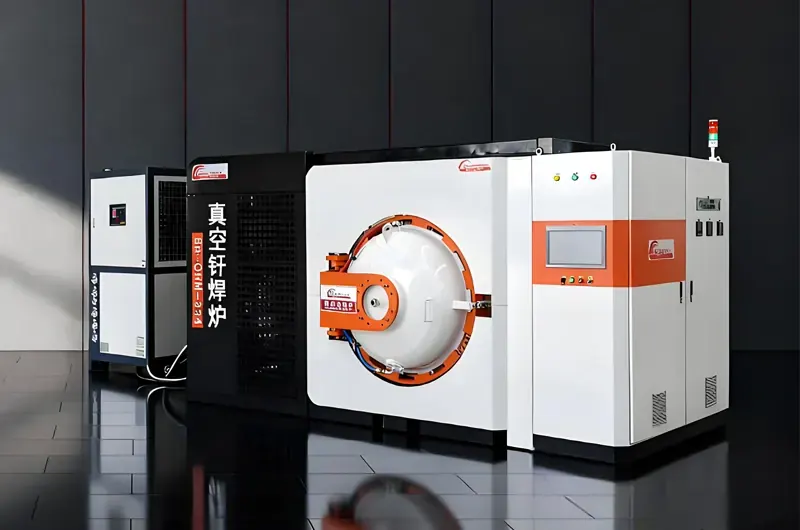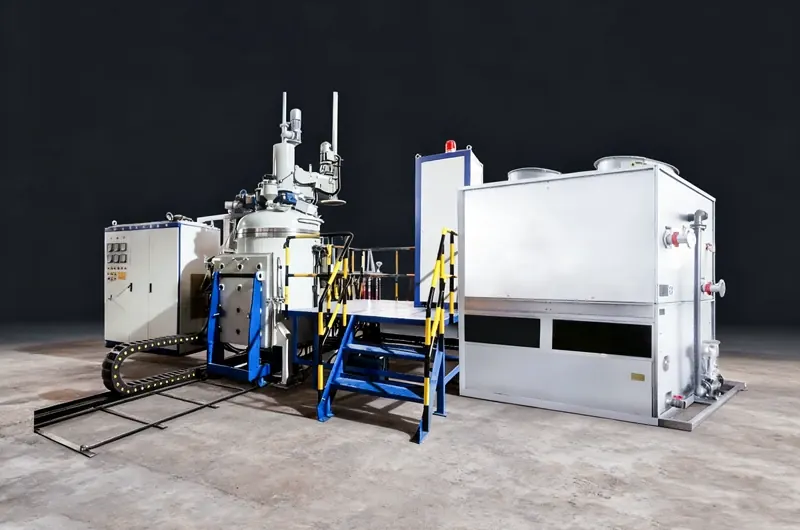
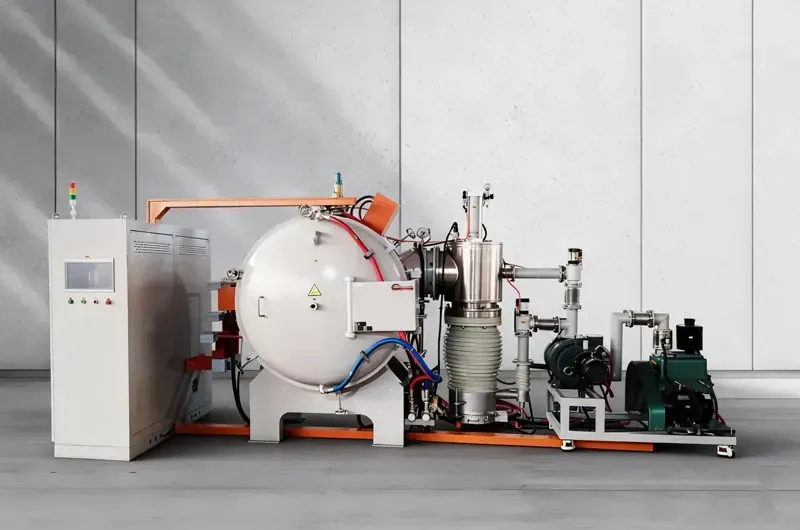
- ISO 9001 Certified
- Exported to 80+ Countries
- Used in Top Research Institutes
- Full Custom Solutions
- Safe Global Delivery
- 2-Year Warranty
What Is It?
What Is a Vacuum Heat Treatment Furnace?
A vacuum heat treatment furnace is a sealed thermal processing system that heats metallic workpieces inside a controlled vacuum environment — typically below one standard atmosphere (1.013×10⁵ Pa). By eliminating oxygen and other reactive gases from the chamber, the furnace prevents oxidation, decarburization, and hydrogen embrittlement that commonly occur in conventional open-air heat treatment.
Under vacuum conditions, heat transfer occurs primarily through radiation, governed by the Stefan-Boltzmann relationship E = C(T/100)⁴. This means the surface-to-core temperature differential remains minimal, resulting in significantly reduced workpiece distortion — a critical advantage for precision components. The service life of vacuum heat-treated parts is typically tens to hundreds of times longer than those processed in conventional furnaces.
Brother Furnace's vacuum heat treatment systems support a wide operating vacuum range — from low vacuum (10² Pa) for general steel processing to high vacuum (10⁻⁴ Pa) for reactive alloys — giving engineers full control over metallurgical outcomes.
- No oxidation or decarburization of workpiece surfaces
- Minimal distortion due to uniform radiant heating
- Eliminates hydrogen embrittlement risk
- Dramatically extended workpiece service life
- Bright, clean surface finish — no post-treatment needed
- Fully programmable PLC process control
Our Product Range
Vacuum Heat Treatment Furnace Series
From rapid gas quenching to gentle annealing, our complete product line covers every vacuum heat treatment process your application demands.
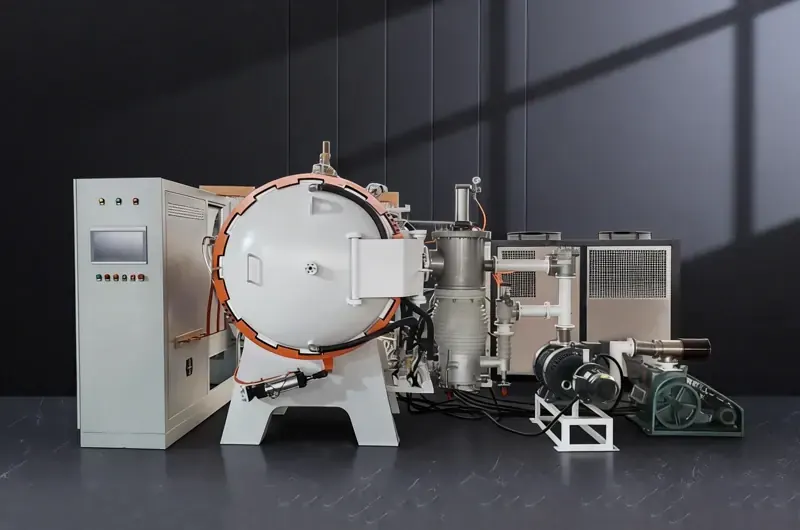
Vacuum Quenching Furnace
Vacuum quenching is the most demanding heat treatment process, requiring precise control of both heating and rapid cooling. Brother Furnace offers two configurations — gas quenching and oil quenching — to suit different material grades and hardening requirements. Both variants operate under high vacuum to ensure bright, oxide-free surfaces and minimal distortion.
Read More about Quenching Furnace Quote-
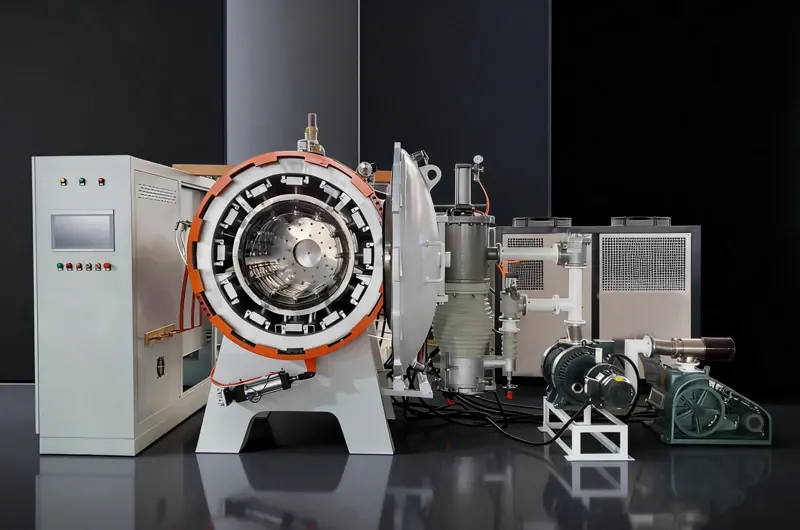
Vacuum Gas Quenching Furnace
Uses high-purity inert gas (typically nitrogen or argon) at elevated pressure (up to 20 bar) to rapidly cool workpieces directly within the heating chamber.
Ideal for high-speed steels, tool steels, and alloy steels where surface cleanliness and minimal distortion are paramount.
The gas flow rate and pressure are fully programmable for optimized cooling curves.
-
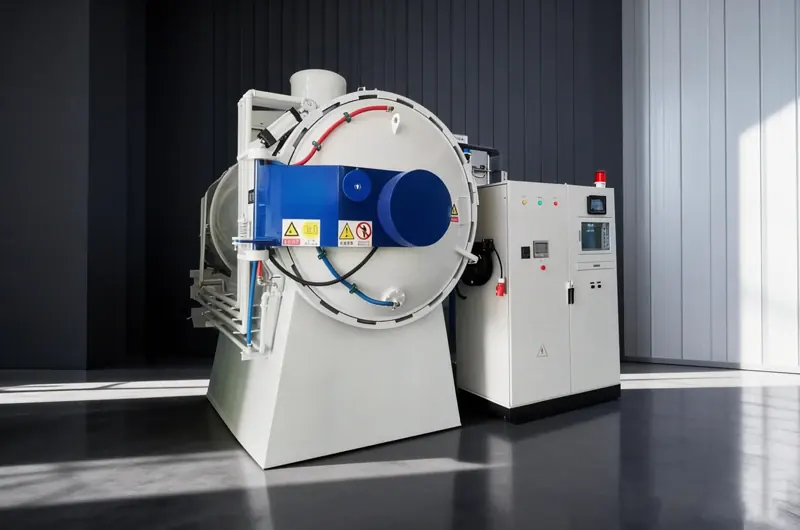
Vacuum Oil Quenching Furnace
Features a double-chamber design with a separate heating chamber and oil quenching bath. Workpieces are heated under vacuum, then transferred and immersed in vacuum-quenching oil via a precision lifting mechanism.
Delivers superior hardness and wear resistance for alloy steels, bearing steels, spring steels, and mold steels that require faster cooling rates than gas quenching can provide.
-
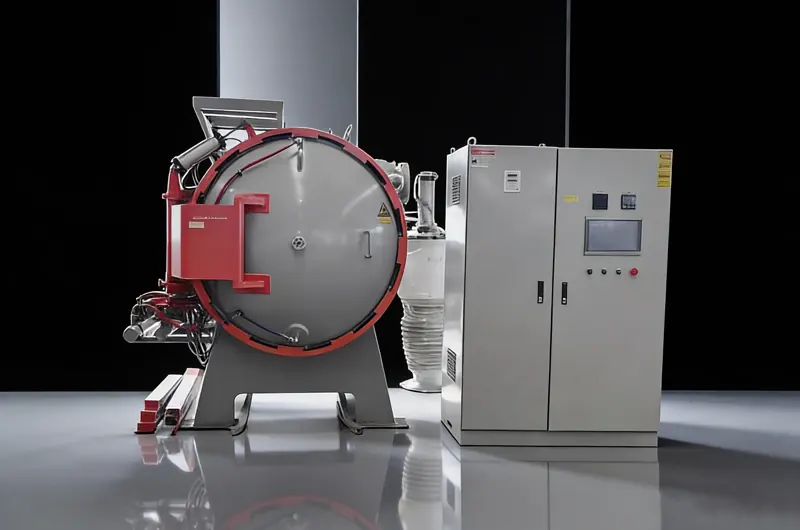
Vacuum Annealing Furnace
The vacuum annealing furnace heats metallic workpieces to a specified temperature, holds them for a defined period, then cools them at a controlled rate — all within a high-vacuum environment.
This process relieves internal stresses, restores ductility, and refines grain structure without any surface contamination. It is widely applied to stainless steel, titanium alloys, copper alloys, and precision electronic components.
-
1350°C
Max Temp
-
10⁻³ Pa
Vacuum Level
-
±5°C
Uniformity
- Programmable multi-segment temperature curves
- Bright annealing — no scale, no discoloration
- Suitable for titanium,-+ stainless & copper alloys
- Optional inert gas backfill for faster cooling
Details -
-
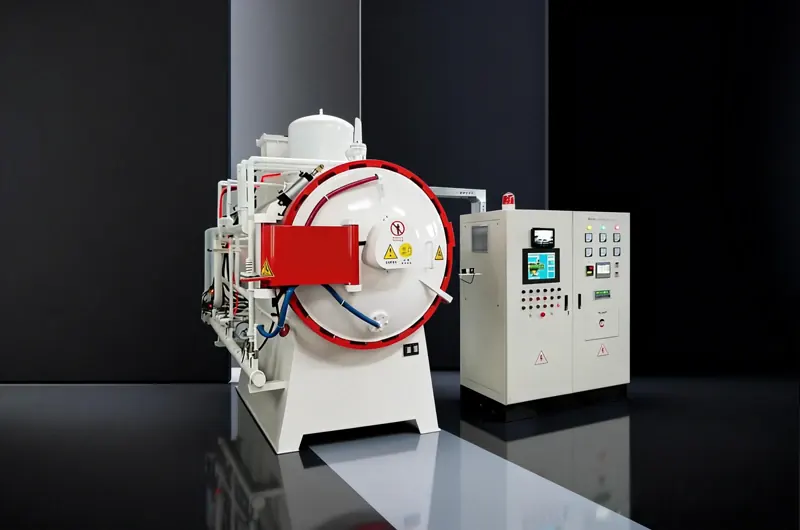
Vacuum Tempering Furnace
After quenching, workpieces are typically too brittle for direct service use. The vacuum tempering furnace reheats quenched parts to a sub-critical temperature (commonly 150–650°C) and holds them to transform martensite into tempered martensite, relieving quench stresses and improving toughness while maintaining the hardness achieved during quenching.
The vacuum atmosphere ensures the bright surface finish is fully preserved.
-
650°C
Typical Max
-
±3°C
Uniformity
-
10⁻² Pa
VVacuum Level
- Reduces brittleness after vacuum quenching
- Precise low-temperature control for sensitive alloys
- Compatible with all quenched tool & die steels
- Often paired with our quenching furnace line
Details -
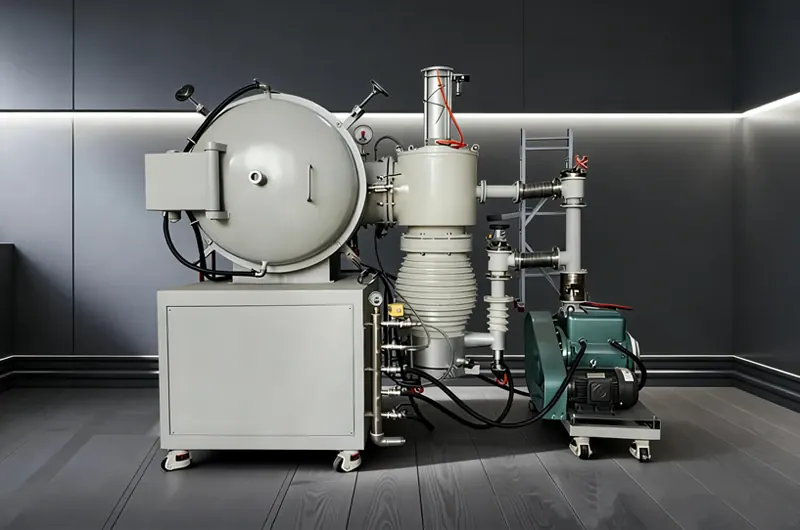
Vacuum Normalizing Furnace
-
900–1100°C
Typical Process Range
-
10⁻³³ Pa
Ultimate Vacuum
Vacuum normalizing heats steel above its upper critical temperature (Ac₃) and then cools it in a controlled inert gas atmosphere rather than open air. This refines the grain structure, homogenizes chemical composition across the cross-section, and improves machinability — making it an essential pre-treatment before final hardening operations.
Unlike conventional air normalizing, the vacuum environment completely prevents surface oxidation and scaling, delivering clean parts ready for the next processing step.
Brother Furnace vacuum normalizing furnaces are especially suited for medium and high carbon steels, alloy structural steels, and forgings or castings that require microstructural homogenization before precision machining or final heat treatment.
- Refines coarse as-cast or forged grain structures
- Homogenizes chemical segregation in alloy steels
- Controlled gas cooling rate — fully programmable
- Oxide-free surface — no shot blasting required
Working Process
How Vacuum Heat Treatment Works
A precisely controlled five-stage process ensures repeatable,high-quality metallurgical outcomes for every batch.
Load & Seal
Workpieces are loaded onto the fixture and the furnace chamber is hermetically sealed, isolating the load from the atmosphere.
Evacuation
The vacuum pump system reduces chamber pressure to the target level (10⁻¹ to 10⁻⁴ Pa) before heating begins.
Heat Soak
The PLC executes a multi-segment heating ramp to the target temperature, then holds (soaks) for the programmed duration to ensure thermal uniformity.
Controlled Cooling
Cooling is performed by gas quenching, oil quenching, or furnace cooling depending on the process — all under vacuum or inert gas backfill.
Unload
Once cooled to a safe temperature, the chamber is vented and bright, clean, distortion-free parts are unloaded — ready for inspection or next process.
Why Vacuum?
Core Advantages of Vacuum Heat Treatment
Compared to conventional atmosphere or salt bath furnaces, vacuum heat treatment delivers measurably superior results across every critical quality metric.
Zero Oxidation & Decarburization
With oxygen and moisture completely removed from the chamber, workpiece surfaces remain chemically pristine throughout the entire thermal cycle — eliminating scale, discoloration, and carbon loss that degrade surface hardness.
Minimal Distortion & Deformation
Uniform radiant heating under vacuum creates an extremely small temperature gradient between the surface and core of the workpiece, dramatically reducing thermal stresses and dimensional distortion — critical for precision dies, molds, and cutting tools.
Superior Surface Quality
Parts emerge with a bright, clean metallic finish requiring no subsequent cleaning, shot blasting, or acid pickling. This not only saves post-processing cost but also preserves the dimensional integrity of finished surfaces.
Extended Workpiece Service Life
Vacuum-treated components consistently demonstrate service lives tens to hundreds of times longer than conventionally treated counterparts, owing to superior microstructure, higher surface hardness retention, and freedom from surface defects.
Precise, Repeatable Process Control
Every parameter — temperature ramp rate, soak time, vacuum level, cooling rate, and gas pressure — is governed by a PLC with touchscreen HMI. Recipes can be stored and recalled, ensuring batch-to-batch consistency in high-volume production.
Environmentally Clean Operation
No open flames, no toxic salt baths, no carburizing gases, and no hazardous waste streams. Vacuum furnaces operate cleanly and safely, meeting modern environmental regulations and providing a safer workplace for operators.
Applications
Industries & Applications
Brother Furnace vacuum heat treatment furnaces serve a broad spectrum of industries where material performance, surface integrity, and dimensional precision are non-negotiable.
-
Aerospace / Defense
- Turbine blade hardening
- Landing gear components
- Titanium structural parts
- High-strength fasteners
-
Automotive
- Transmission gears & shafts
- Injection mold tooling
- Crankshafts & camshafts
- Spring & bearing steel parts
-
Tool / Die Making
- High-speed steel cutting tools
- Cold & hot work die steels
- Precision punches & dies
- Carbide tooling components
-
Electronics / Semicon
- Copper & alloy lead frames
- Precision connector parts
- Magnetic material annealing
- Thin-film substrate treatment
-
Medical Devices
- Surgical instrument hardening
- Implant-grade titanium parts
- Stainless steel annealing
- Orthopedic component treatment
-
General Machinery
- Bearing ring normalizing
- Hydraulic component hardening
- Alloy steel forgings
- Precision shaft & sleeve parts
-
Energy / Power
- Nuclear component annealing
- Wind turbine gear hardening
- High-temp alloy treatment
- Valve & fitting hardening
-
Research / Academia
- New alloy development
- Material science experiments
- Small-batch R&D processing
- University lab furnaces
Why Brother Furnace
Your Trusted Vacuum Furnace Partner
Since 2008, Brother Furnace has built a reputation on engineering excellence, rigorous quality control, and genuine after-sales commitment.
-
15+
Years in Furnace Manufacturing
-
50+
Countries with Active Installations
-
5000+
Furnaces Delivered Worldwide
-
3
Certifications (CE / SGS / BV)
-
Complete In-House Manufacturing
Five dedicated workshops — sheet metal fabrication, surface treatment, MoSi₂ heating element production, chamber machining, and final furnace assembly — all under one roof with integrated quality control at every stage.
-
International Certifications
All Brother Furnace products carry EU CE certification and are independently verified by SGS and BV inspection bodies, ensuring compliance with the highest international safety and quality standards.
-
Dedicated Engineering Team
Our in-house engineers specialize in mechanical design, electrical automation, and thermal process technology — providing expert support from initial specification through commissioning and beyond.
-
Full Customization Capability
Standard models cover the majority of applications, but our engineering team routinely develops custom chamber sizes, heating element materials, vacuum system configurations, and control interfaces to meet unique process requirements.
-
Comprehensive After-Sales Support
From installation guidance and operator training to remote diagnostics and spare parts supply, our global support network ensures your furnace operates at peak performance throughout its service life.
-
Global Logistics & On-Time Delivery
With established partnerships across major international freight carriers, we ensure safe, timely delivery of every furnace — including full export packaging, customs documentation support, and real-time shipment tracking from our factory to your facility.
FAQ
Frequently Asked Questions
Answers to the most common questions our customers ask before selecting and ordering a vacuum sintering furnace.
What is the difference between vacuum gas quenching and vacuum oil quenching?
Gas quenching uses high-pressure inert gas (nitrogen or argon) to cool the workpiece inside the same chamber, offering cleaner operation and lower distortion — ideal for high-speed steels and tool steels. Oil quenching uses a separate oil bath chamber and delivers faster cooling rates, making it better suited for alloy steels, bearing steels, and materials that require a more rapid quench to achieve full hardness.
What vacuum level do I need for my heat treatment process?
The required vacuum level depends on your material and process temperature. As a general guide: low alloy and high chromium steels typically require 1.33–12.3 Pa; high carbon and high alloy steels need ≤1.33×10⁻² Pa; carbon steels should not exceed 1.33×10⁻² Pa. At higher temperatures, a lower vacuum (higher pressure) with partial nitrogen backfill is recommended to prevent alloy element volatilization. Our engineers can advise the optimal vacuum level for your specific application.
Can the furnace process titanium and reactive alloys?
Yes. Titanium, tungsten, and other reactive alloys are among the primary beneficiaries of vacuum heat treatment. These materials oxidize rapidly in air but remain chemically stable under high vacuum. For titanium processed at temperatures approaching 1250°C, we recommend a vacuum level of approximately 1.33×10⁻² Pa. Our furnaces can be configured with metallic hot zones to avoid carbon contamination from graphite components when processing reactive alloys.
How long does a typical vacuum heat treatment cycle take?
Cycle time depends on the material, workpiece mass, target temperature, and required soak time. A typical tool steel quenching cycle runs 4–8 hours including pump-down, heating ramps, soaking, and cooling. Annealing cycles for stress relief may be shorter (2–4 hours), while full annealing of large loads can take 8–12 hours. Our PLC systems allow you to program and optimize cycle times for your specific process.
Do you offer custom furnace sizes beyond the standard models?
Absolutely. Custom chamber dimensions, loading capacities, temperature ranges, vacuum system configurations, and heating element materials are all available. Whether you need a compact laboratory furnace or a large-scale industrial system, our engineering team will design a solution matched to your exact process requirements and facility constraints. Please share your specifications via the inquiry form below.
What after-sales support does Brother Furnace provide?
We provide comprehensive support including installation guidance documentation, video commissioning assistance, operator training materials, remote troubleshooting via video call, and a full spare parts supply service. Our technical team is reachable by email and phone during business hours, and critical spare parts such as heating elements, thermocouples, and seals are held in stock for rapid dispatch to minimize your downtime.
What is the lead time for delivery?
Standard model furnaces typically have a production lead time of 30–45 working days after order confirmation and deposit receipt. Custom or large-scale systems may require 60–90 working days depending on complexity. We work with reputable international freight forwarders to arrange sea, air, or express shipping to your destination, and we handle all export documentation including packing lists, commercial invoices, and certificates of origin.
How does vacuum heat treatment compare to atmosphere furnace treatment?
Vacuum heat treatment offers several clear advantages over atmosphere furnaces: complete elimination of oxidation and decarburization (no protective gas consumption), significantly brighter surface finish requiring no post-cleaning, lower distortion due to more uniform heating, elimination of hydrogen embrittlement risk, and a cleaner, safer operating environment with no flammable or toxic gases. While the initial equipment investment is higher, the savings in post-processing, rework, and scrap rates typically deliver a strong return on investment.
Also From Brother Furnace
Related Vacuum Furnace Products
Explore our full range of industrial vacuum furnaces — all engineered and manufactured in-house at Brother Furnace.