
Factory Manufacturer
Custom Engineering
Stable Brazing Quality
Global Support
- Suitable for high-value precision tools and superhard material brazing.
- Helps reduce oxidation, contamination, overheating, and inconsistent joints.
- Supports customized fixture loading for different tool geometries.
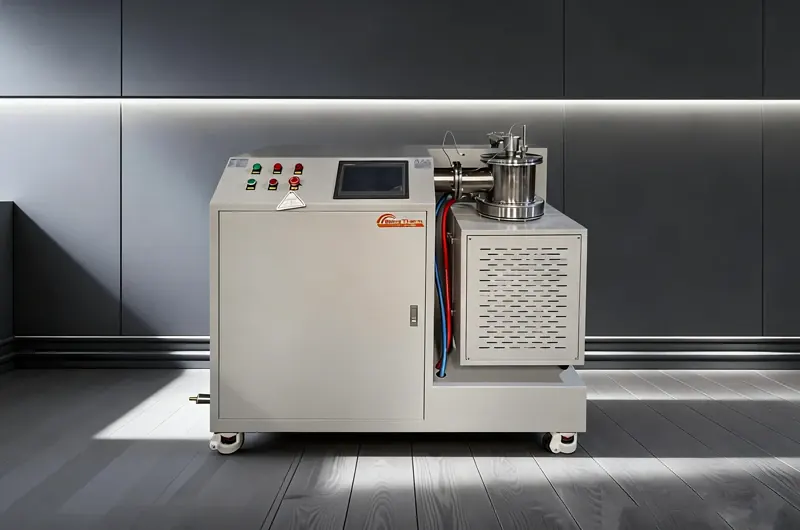
Vacuum Brazing Furnace for Carbide, PCD, PCBN and Diamond Tools
A vacuum tool brazing furnace is an industrial vacuum furnace used to join hard cutting materials to steel or alloy tool bodies by melting brazing filler metal under a controlled vacuum environment.
It is widely used for carbide cutting tools, PCD tools, PCBN tools, diamond tools, CBN tools, saw blades, drills, milling cutters, grinding wheels, molds, and wear-resistant tool assemblies. Compared with flame brazing or highly operator-dependent manual brazing, vacuum brazing provides a cleaner atmosphere, more uniform heating, and better batch repeatability.
Brother Furnace designs each furnace according to the customer's tool size, brazing alloy, process temperature, vacuum requirement, batch capacity, and production layout.
Designed for High-Value
Tool Brazing Applications
Customers usually care first about whether their real parts can be processed. This furnace can be configured for a wide range of cutting tools, diamond tools, molds, and wear-resistant components.
-
Carbide Cutting Tools
For turning tools, milling cutters, drills, reamers, inserts, woodworking knives, mining tools, and carbide-to-steel assemblies.
-
PCD & PCBN Tools
For superhard tools used in automotive, aerospace, aluminum alloy machining, hardened steel machining, and precision manufacturing.
-
Diamond Tools
For diamond saw blades, grinding wheels, core drills, stone tools, glass processing tools, and wear-resistant cutting products.
-
Molds & Tooling Parts
For mold inserts, forming tools, wear plates, special tooling assemblies, and parts requiring clean joining with controlled heating.
-
Saw Blades & Grinding Tools
For circular saw blades, segmented saw tools, grinding tools, and larger tooling products that require stable batch loading.
-
Custom Tool Assemblies
For complex tool structures that require special fixtures, positioning support, uniform temperature, and repeatable process recipes.
Why Choose Vacuum Brazing for
Tool Manufacturing?
Tool producers want strong joints, clean surfaces, low scrap rate, and stable repeatability. A vacuum tool brazing furnace is designed to solve these production concerns.
| Customer Concern | Vacuum Tool Brazing Furnace Value |
|---|---|
| Oxidation on tool surface | Vacuum environment helps reduce oxidation and surface contamination during heating. |
| Weak or inconsistent joints | Controlled heating curves, holding time, and recipe management improve brazing repeatability. |
| Tool deformation or overheating | Uniform heating reduces local overheating and supports more stable tool dimensions. |
| Limited batch capacity | Custom fixtures and chamber size allow multiple tools to be brazed in one production cycle. |
| High-value PCD, PCBN, or diamond tools | Cleaner process conditions help protect expensive tool materials and improve production confidence. |
| Operator-dependent process quality | PLC automatic control and stored recipes reduce manual operation variation. |
Built for Clean Joints, Uniform Heating
and Repeatable Production
The furnace structure, heating chamber, vacuum system, cooling method, and loading fixtures can be matched to different tool materials and production targets.
-
High Vacuum Brazing Environment
Protects tool surfaces and supports cleaner brazed joints.
-
Uniform Heating Chamber
Multi-zone control supports stable temperature distribution.
-
Graphite or Metal Hot Zone
Different chamber materials for different brazing requirements.
-
PLC Recipe Control
Stores heating curves, holding time, cooling steps, and alarms.
-
Custom Tool Fixtures
Tool trays, supports, and positioning fixtures can be designed.
-
Controlled Cooling
Vacuum cooling, gas cooling, or forced cooling options available.
-
Data Traceability
Optional process recording for batch quality management.
-
Safety Protection
Water, vacuum, temperature, current, and door interlock protection.
Recommended Furnace Configurations for
Different Tool Producers
Different tools require different furnace structures. Brother Furnace helps customers select the right configuration instead of simply selling one standard machine.
Standard Tool Brazing Furnace
Suitable for carbide tools, steel-based tool assemblies, general cutting tools, and medium-volume production.
- Recommended for carbide tips and common cutting tools
- Graphite or metal hot zone available
- PLC recipe control and stable vacuum system
- Custom tool trays and loading fixtures
PCD / PCBN / Diamond Tool Furnace
Designed for high-value superhard tools that require cleaner brazing conditions and tighter process control.
- Suitable for PCD, PCBN, CBN, and diamond tools
- Higher vacuum configuration optional
- Enhanced temperature uniformity and recipe control
- Optional process data recording and traceability
Large-Capacity Tool Brazing Furnace
Built for saw blades, grinding tools, larger tool assemblies, and batch production lines with capacity requirements.
- Customized chamber size and loading trolley
- Designed for larger tools and higher batch volume
- Gas cooling or forced cooling options
- Optimized layout for workshop production flow
Typical Vacuum Tool Brazing Process
A stable brazing process is not only about the furnace. It also depends on cleaning, assembly, fixture design, temperature curve, holding time, cooling, and inspection.
Tool Cleaning
Remove oil, dust, oxide, and contamination from tool bodies, inserts, and brazing surfaces.
Assembly & Filler
Place brazing alloy, inserts, or tips accurately according to tool structure and joint requirements.
Fixture Loading
Load tools onto trays, racks, supports, or customized fixtures for stable positioning.
Vacuum Pumping
Evacuate the furnace chamber to create a clean and controlled brazing environment.
Controlled Heating
Heat according to the programmed curve to reduce thermal shock and process variation.
Brazing & Holding
The filler metal melts, wets the surfaces, and forms a stable brazed joint.
Controlled Cooling
Cool under vacuum or protective gas according to material and production requirements.
Inspection
Check joint appearance, position, strength, batch consistency, and tool quality.
Typical Vacuum Tool Brazing Process
A stable brazing process is not only about the furnace. It also depends on cleaning, assembly, fixture design, temperature curve, holding time, cooling, and inspection.
- Vacuum leak test
- Temperature uniformity test
- Empty furnace heating test
- Control system test
- Safety interlock test
- Packing inspection
- Optional sample trial support
- Factory acceptance support
Customized According to Your Tool,
Alloy and Production Capacity
Tool brazing requirements vary by material, geometry, filler metal, batch quantity, and quality standards. Brother Furnace can customize the furnace configuration based on your actual production process.
- Working zone size
- Maximum temperature
- Hot zone material
- Vacuum system
- Cooling speed
- Loading fixtures
- Local voltage
- Data recording
- Automation level
How to Select the Right
Vacuum Tool Brazing Furnace
Before quotation, these details help our engineers recommend a furnace that matches your tools, process, capacity, and budget.
Tool Material
Carbide, PCD, PCBN, diamond, CBN, ceramic, steel, or alloy base.
Tool Size
Maximum length, width, height, weight, and fixture arrangement.
Brazing Alloy
Filler metal type, melting range, and process cleanliness requirements.
Temperature
Working temperature, holding time, and heating curve requirements.
Batch Capacity
Pieces per batch, production shift, and desired cycle time.
Hot Zone
Graphite, molybdenum, metal screen, or special chamber design.
Vacuum Level
Required ultimate vacuum and working vacuum during brazing.
Cooling Method
Vacuum cooling, forced cooling, or controlled slow cooling.
Power Supply
Local voltage, frequency, phase, and workshop electrical conditions.
Data & Control
Recipe management, data logging, remote diagnosis, and alarm records.
Frequently Asked Questions
Answers to the questions our customers ask most often about the vacuum tungsten wire sintering furnace.
What is a vacuum tool brazing furnace used for?
It is used to braze carbide tools, PCD tools, PCBN tools, diamond tools, CBN tools, cutting inserts, molds, saw blades, grinding tools, and wear-resistant tool components under a controlled vacuum environment.
Can this furnace braze carbide cutting tools?
Yes. It can be configured for brazing carbide tips, carbide inserts, drills, milling cutters, turning tools, woodworking tools, mining tools, and carbide-to-steel tool assemblies.
Is it suitable for PCD and PCBN tools?
Yes. We can recommend suitable hot zone material, vacuum level, temperature control, and fixture design for PCD and PCBN tool brazing according to your process requirements.
What is the difference between vacuum brazing and induction brazing?
Induction brazing is often faster for individual parts but depends heavily on coil design and operator control. Vacuum brazing is more suitable for clean batch production, uniform heating, and reduced oxidation.
What temperature is required for tool brazing?
The working temperature depends on the tool material and brazing filler metal. Common furnace configurations include 1200°C, 1350°C, and 1600°C maximum temperature options.
Can the furnace chamber size be customized?
Yes. The chamber size, hot zone size, loading method, fixture design, and batch capacity can be customized according to your tool size and production target.
Which hot zone is better, graphite or molybdenum?
Graphite hot zones are commonly used for many high-temperature vacuum processes, while molybdenum or metal hot zones may be selected when cleanliness, material compatibility, or process requirements demand it.
Can you provide brazing fixtures?
Yes. Tool trays, racks, supports, and positioning fixtures can be designed according to your tool shape, loading pattern, and required production capacity.
What information should I provide for quotation?
Please provide tool material, tool size, brazing alloy, brazing temperature, batch quantity, required vacuum level, cooling requirement, local voltage, and destination country.
Do you provide installation and training?
Yes. Brother Furnace provides installation guidance, operator training, remote technical support, spare parts supply, and long-term after-sales service.
Supporting Tool Manufacturers Across
Multiple Industries
The vacuum tool brazing furnace is suitable for manufacturers and laboratories that need controlled joining of high-hardness, wear-resistant, and high-value tool materials.