
Factory Manufacturer
Uniform Heating
Low Contamination
Global Support
High-Cleanliness Vacuum Brazing With Molybdenum Strip Heating
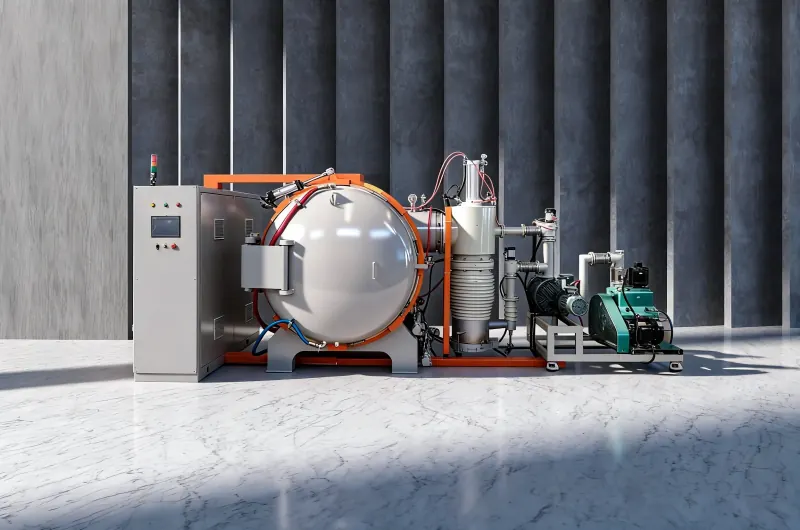
A molybdenum strip vacuum brazing furnace is an industrial vacuum furnace that uses molybdenum strip heating elements and metallic thermal insulation to create a clean high-temperature environment for precision brazing. It is especially suitable for parts that require high joint quality, bright surfaces, minimal oxidation, and low risk of carbon contamination.
Compared with graphite heating furnaces, the molybdenum heated furnace offers a cleaner hot zone for sensitive metal assemblies. It is widely used for stainless steel parts, nickel-based alloys, aerospace structures, medical instruments, sensor housings, heat exchangers, carbide tools, and other high-value components.
Brother Furnace provides customized vacuum brazing furnace systems according to your part size, loading weight, brazing temperature, vacuum level, cooling requirement, production cycle, and automation needs.
Why Choose A Molybdenum Strip
Vacuum Brazing Furnace?
The furnace is designed for manufacturers who need clean brazing results, reliable temperature control, stable vacuum performance, and repeatable production quality.
-
Reduce carbon pollution
Molybdenum strip heating and metallic insulation help reduce carbon pollution risk compared with graphite hot zones.
-
Stable Temperature Uniformity
Multi-zone PID control, optimized heating layout, and optional temperature mapping help maintain consistent brazing quality.
-
Clean High Vacuum
Mechanical, Roots, diffusion, or molecular pump configurations are available according to process cleanliness requirements.
-
Flexible Cooling Options
Choose vacuum cooling, inert gas cooling, forced circulation cooling, or high-pressure gas cooling for different cycle needs.
-
PLC Automatic Control
Recipe storage, data logging, alarms, interlocks, remote support, and optional communication interfaces are available.
-
Custom Furnace Design
Chamber size, loading method, temperature range, vacuum system, cooling pressure, and automation level can be customized.
Materials and Brazing Fillers
Final furnace selection should be based on your material grade, brazing filler, joint design, cleanliness requirement, and production cycle.
| Material / Component | Suitability | Typical Notes |
|---|---|---|
| Stainless Steel | Suitable | Commonly used for heat exchangers, medical parts, and precision assemblies. |
| Nickel Alloy | Suitable | Suitable for high-temperature and corrosion-resistant components. |
| Copper Components | Suitable | Requires proper process control and filler selection. |
| Carbide Tools | Suitable | Used for tool brazing with controlled heating and cooling cycles. |
| Titanium Alloy | Process Dependent | Requires special vacuum cleanliness and process evaluation. |
| Aluminum Brazing | Optional Design | Usually requires dedicated temperature control and furnace configuration. |
Built for Precision Brazing Applications
This furnace is suitable for manufacturers that require clean joints, consistent process control, and reliable production repeatability.
-
Aerospace PartsHoneycomb structures, turbine components, precision assemblies, and high-value alloy parts.
-
Heat ExchangersStainless steel plate heat exchangers, compact coolers, and thin-wall brazed assemblies.
-
Medical DevicesSurgical instruments, precision stainless steel components, and clean metal assemblies.
-
Carbide ToolsCarbide inserts, cutting tools, diamond tools, and wear-resistant tool assemblies.
-
Automotive ComponentsEGR coolers, sensors, fuel components, and stainless steel functional parts.
-
Electronics & SensorsSensor housings, ceramic-to-metal parts, vacuum devices, and electronic packages.
-
Laboratory R&DResearch brazing, material testing, process development, and pilot production.
-
Custom Metal AssembliesComplex stainless steel, copper, nickel alloy, and high-performance metal components.
Typical Furnace Parameters
All specifications can be customized according to your product size, loading weight, temperature requirement, and process standard.
| Parameter | Typical Configuration | Custom Options |
|---|---|---|
| Furnace Type | Horizontal vacuum brazing furnace | Vertical or special loading structure available |
| Heating Element | Molybdenum strip | Molybdenum, tungsten, or graphite according to process |
| Max Temperature | 1350°C | 1600°C or higher design available |
| Working Temperature | 950°C - 1250°C typical brazing range | Designed according to filler material |
| Temperature Uniformity | ±5°C typical | ±3°C available depending on chamber size |
| Ultimate Vacuum | 6×10⁻³ Pa | High vacuum / molecular pump optional |
| Vacuum System | Mechanical pump + Roots pump + diffusion pump | Molecular pump, imported pump brands optional |
| Cooling Method | Vacuum cooling / inert gas cooling | 2 bar, 6 bar, or high-pressure gas cooling |
| Gas Type | Nitrogen / Argon | Process-specific protective gas system |
| Control System | PLC + touchscreen HMI | Siemens PLC, data logging, remote diagnostics |
| Loading Method | Manual trolley loading | Automatic loading and transfer system |
| Power Supply | 380V / 50Hz / 3 phase | Customized voltage for destination country |
Designed Around Your Brazing Process
Each system is configured to match your technical requirements, production capacity, and investment plan.
Heating & Hot Zone
Molybdenum strip heating elements provide clean radiation heating for precision brazing applications. The thermal field can be designed with multiple zones to improve uniformity.
- Heating ElementMolybdenum strip
- InsulationMolybdenum / stainless steel shields
- ControlMulti-zone PID control
- TestingTemperature mapping available
Vacuum System
The vacuum system can be selected according to the required vacuum level, pumping speed, process cleanliness, and budget.
- StandardMechanical + Roots + diffusion pump
- OptionalMolecular pump for high vacuum
- ValvesPneumatic vacuum valves
- MonitoringVacuum gauge and automatic interlock
Cooling System
Cooling design affects production cycle, part distortion, and final metallurgical quality. We provide different cooling solutions for different brazed components.
- Basic CoolingVacuum cooling
- Gas CoolingNitrogen or argon circulation
- Pressure2 bar / 6 bar optional
- EfficiencyHeat exchanger and internal fan available
Control & Safety
The automatic control system improves repeatability, reduces operator error, and protects the furnace during long production cycles.
- ControllerPLC + HMI touchscreen
- RecipesMulti-step process storage
- DataUSB / Ethernet export optional
- SafetyOver-temperature, water, pressure, vacuum interlocks
Molybdenum Strip vs. Graphite Heating
Choosing the right hot zone material is important for process cleanliness, cost, maintenance, and product quality.
Molybdenum Strip Furnace
- Cleaner hot zone with lower carbon contamination risk
- Suitable for high-value stainless steel and nickel alloy brazing
- Good temperature uniformity and process repeatability
- Preferred for precision, medical, aerospace, and clean metal assemblies
- Higher initial cost but better for sensitive parts
Graphite Furnace
- Strong high-temperature capability
- Lower hot zone cost in many applications
- Common for sintering, heat treatment, and general brazing
- Possible carbon contamination for sensitive parts
- Not always ideal for clean metal brazing requirements
Frequently Asked Questions
Answers to the questions our customers ask most often about the vacuum tungsten wire sintering furnace.
What is a molybdenum strip vacuum brazing furnace?
It is a vacuum furnace that uses molybdenum strip heating elements to braze metal components under vacuum or inert gas conditions. It is used when bright surfaces, clean joints, low oxidation, and reduced carbon contamination are required.
Why choose molybdenum heating instead of graphite heating?
Molybdenum heating is preferred for cleaner brazing environments because it reduces the risk of carbon contamination. It is especially suitable for precision stainless steel, nickel alloy, aerospace, medical, and high-value metal assemblies.
What materials can be brazed in this furnace?
Common materials include stainless steel, nickel alloy, copper components, carbide tools, precision metal assemblies, and some ceramic-to-metal parts. Titanium and aluminum applications require special process evaluation.
What vacuum level can the furnace achieve?
A typical configuration can reach around 6×10⁻³ Pa. Higher vacuum levels can be designed using advanced pump combinations, including molecular pump systems, depending on your process requirements.
Can you guarantee temperature uniformity?
Temperature uniformity depends on chamber size, hot zone design, loading condition, and working temperature. Brother Furnace can provide multi-zone control and optional temperature mapping to support ±5°C or ±3°C requirements where applicable.
What cooling methods are available?
Available cooling methods include vacuum cooling, nitrogen cooling, argon cooling, forced gas circulation, and optional high-pressure gas cooling. The correct option depends on material, distortion sensitivity, and production cycle requirements.
How long does the molybdenum strip heating element last?
Service life depends on working temperature, vacuum quality, process atmosphere, loading condition, and operation habits. Proper vacuum maintenance, clean loading, and stable process control help extend heating element life.
Can the furnace chamber size be customized?
Yes. Chamber size, hot zone dimensions, loading weight, trolley structure, door type, power rating, and cooling system can be customized according to your product size and batch capacity.
Do you provide installation and commissioning support?
Yes. We can provide installation guidance, commissioning support, operation training, maintenance instructions, troubleshooting support, and spare parts supply according to the project scope.
What information should I provide for a quotation?
Please provide material type, part dimensions, loading weight, brazing filler, working temperature, vacuum level, cooling requirement, production capacity, power supply, and any relevant process standard or drawing.